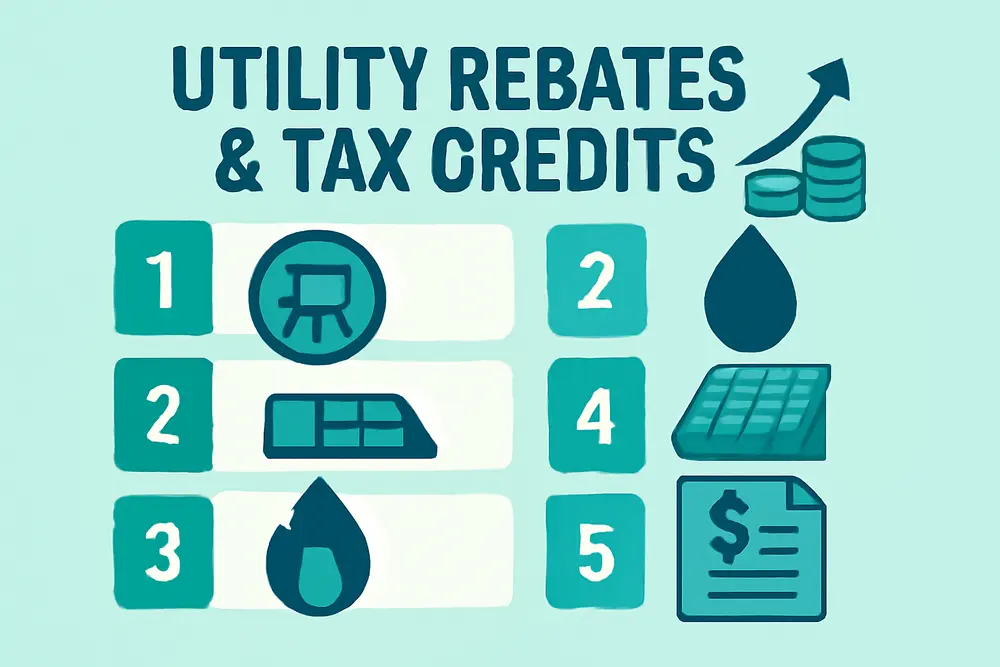
Searches like “utility rebates near me,” “heat pump rebate,” and “tax credit eligibility” come from buyers who are basically at the checkout screen. If you build a city-to-federal rebates page that answers those searches clearly, you lower price pushback, speed up quotes, and turn more of those high-intent visitors into calls and form fills. Here’s a practical plan to research incentives in your service area, package them into an SEO-optimized page, and turn incentives into revenue.
Why A Rebates Page Wins Local Search
Price is the biggest objection for home upgrades. When a homeowner sees how rebates and credits can cut thousands off the total, sticker shock fades and urgency kicks in. An incentives page also targets long-tail, bottom-of-funnel keywords that most competitors ignore. People who google “utility rebates for heat pumps [city]” or “tax credit eligibility for windows [state]” are at the make-a-decision stage, not the just-looking stage. If your page clearly lists what’s available and how to claim it, you’re the helpful expert who earns the call.
What To Research First
Your goal is to publish accurate, local, current figures that make a homeowner say, “That’s me.” Start by mapping your service area to real incentives:
Federal programs. Confirm the Energy Efficient Home Improvement Credit and the Residential Clean Energy Credit. Pull current percentages, annual caps, timelines, and qualifying equipment rules. The IRS updates guidance regularly, so cite their latest publication and FAQs.
State programs. These vary a lot. Some states add tax credits. Others run point-of-sale rebates for specific equipment or income bands. Check your state energy office and the DSIRE database.
Utility rebates. These are your conversion rocket fuel. Identify every utility that serves your ZIP codes, then find their program pages, approved product lists, and rebate application forms. Watch for pre-approval requirements, preferred contractor rules, funding limits, and expiration dates.
Eligibility details. Capture who qualifies, which properties are eligible, product certifications like ENERGY STAR, installation rules, documentation, and timelines. Incentives are useless if the homeowner learns too late that they needed pre-approval or the wrong product was installed.
Reliable Sources To Use
Department of Energy. Start with the DOE’s homeowner upgrade guidance at energy.gov/save/home-upgrades. It gives plain-language summaries of rebates and credits tied to energy improvements.
IRS. For federal credit rules, use the current IRS publication and FAQs. The Energy Efficient Home Improvement Credit and Residential Clean Energy Credit overview is here: irs.gov/pub/irs-pdf/p5797.pdf. Keep an eye on IRS FAQs about qualified expenditures, annual caps, carryforwards, and whether rebates reduce your credit base.
DSIRE. The Database of State Incentives for Renewables & Efficiency catalogs state, local, and utility programs: dsireusa.org. It is a great cross-check.
Utility portals. Go directly to each utility’s energy efficiency or rebates page. Many utilities host searchable tools that show rebate values by product type and ZIP code. If you want a starting list by state and utility, try tools like utilitycheck.co/rebates, then verify the official utility page for the final numbers.
State energy offices. For Inflation Reduction Act rebates such as HOMES and High-Efficiency Electric Home Rebate Program, availability and rules depend on the state rollout schedule. Your state energy office site will show status and links to program administrators.
Turn Research Into SEO That Ranks
Google rewards pages that match search intent and provide unique local detail. That means your page should use plain-English copy, real numbers for your city and utilities, and clear steps to qualify. Keep your primary keywords close to the top. Use variations like “utility rebates in [city],” “tax credit eligibility for [state],” and “rebates from [utility name]” naturally in body copy and headers.
Set a clean URL structure that includes location, such as /incentives/[state]/rebates-tax-credits or /rebates-tax-credits-[city]. Build internal links from your HVAC, solar, windows, insulation, and plumbing pages using anchor text like “check utility rebates” and “see your tax credit eligibility.” That passes authority and helps visitors discover savings while they are reviewing services.
Use schema where it helps you win space in search results. An FAQ block can grab featured snippets. LocalBusiness schema supports NAP consistency. Breadcrumbs help users and crawlers. Add an “updated on” date near the top to show freshness, since these pages change often.
Suggested Page Layout
Headline. Use a local H1 like “Utility Rebates & Tax Credit Eligibility in [City, State].” That hits your target keywords and signals local focus immediately.
Intro. In two or three lines, define rebates vs. credits and say how much a typical homeowner in your area could save on upgrades like heat pumps, water heaters, windows, insulation, solar, or EV chargers. Promise a quick path to check eligibility and apply.
Federal incentives. Summarize the two big credits and use real numbers:
Energy Efficient Home Improvement Credit. Generally 30 percent of qualified costs up to annual caps. Many improvements share a 1,200 dollar annual limit. Certain items such as heat pumps, heat pump water heaters, and biomass stoves have a separate 2,000 dollar annual limit. Reference the IRS page so homeowners can confirm exact caps for their situation. Link the IRS publication for transparency.
Residential Clean Energy Credit. Generally 30 percent of qualified costs for solar PV, solar water heating, small wind, geothermal heat pumps, and eligible battery storage with no annual dollar cap through 2032. Unused amounts may carry forward, subject to IRS rules. Again, link the IRS source.
State and local programs. Organize by your service area. If you cover multiple cities or counties, use a ZIP selector or a short list of cities with accordions that reveal each utility’s rebates. Include eligibility differences such as income limits or pre-approval.
Eligibility checklist. Help users self-qualify and reduce back-and-forth. Cover property type rules, primary residence vs. rental considerations, product certifications, contractor requirements, and documents needed to apply. This is conversion content because it tells people what to do next.
Stacking rules. Explain how utility rebates, state incentives, and federal credits can work together. Give a few scenarios and remind readers that some rebates may reduce the cost basis used to calculate a federal credit. Encourage them to confirm details with a tax professional.
Case study. Show a real or sample project in your city with pre-incentive price, each rebate or credit by name, and the final net cost. The numbers matter. It is the part most visitors will screenshot.
Calls to action. Make it simple to act. “Check rebates in your ZIP,” “See your tax credit eligibility today,” “Call for a free savings estimate,” and “We’ll file your utility rebate paperwork for you” are all strong. Add a short form for instant follow up.
FAQ. Answer questions about qualifying products, timing, paperwork, renters and HOAs, whether rebates affect the federal credit amount, and how long approvals take. Mark it up with FAQ schema in your CMS.
Stacking Incentives Without Headaches
Homeowners love hearing that incentives can be combined. Your page should show common stacks and the order in which they are applied. Many utility or state rebates are either point-of-sale discounts or post-installation checks. Federal credits are claimed when the homeowner files taxes for the year the work was placed in service. In some cases, rebates from a utility or state program can reduce the cost basis used to calculate the federal credit. The IRS guidance addresses when amounts paid by a public utility or via other incentives reduce the qualified expenditure. Since every situation is different, include a simple advisory like “We’re not tax advisors. Please confirm your final tax credit with a qualified tax professional.”
Timing matters. If a utility requires pre-approval for a heat pump or insulation project, put that step up front. If funds are limited or first-come-first-served, say so. Show exactly how your team helps gather model numbers, AHRI certificates, and invoices that list labor and materials separately when required. Friction kills conversions. Clarity converts.
Case Study Example
Use numbers from your territory, but here’s a format you can adapt for a heat pump project in [City, State] with [Utility Name].
| Item | Amount | Notes |
|---|---|---|
| High-efficiency heat pump installed | $9,500 | Meets program efficiency and AHRI specs |
| [Utility Name] rebate | -$1,000 | Requires pre-approval and final inspection |
| [State] rebate or incentive | -$500 | Availability varies by budget cycle |
| Federal Energy Efficient Home Improvement Credit | Up to $2,000 | Subject to IRS annual caps and eligibility |
| Estimated net cost after incentives | ~$6,000 | Actual tax credit depends on individual tax situation |
For a solar or battery project, format it similarly and reference the Residential Clean Energy Credit at 30 percent, with any state or utility solar rebates listed first. If your utility offers a separate rebate for smart thermostats or heat pump water heaters, add a second example so readers see multiple paths to savings.
Conversion Elements That Drive Calls
Put your biggest CTA above the fold. Offer two actions: a click-to-call button for mobile users and a short form for everyone else. Keep the form tight. Name, ZIP, email, phone, and a dropdown for project type are usually enough. Add a checkbox that says “I want you to check my utility rebates and tax credit eligibility.” That single line frames your follow up as value, not a sales pitch.
Use a ZIP and utility selector to deliver instant micro-wins. A simple tool that says “Good news. [Utility Name] offers up to $1,200 on qualifying heat pumps in [City]” keeps visitors moving down the page. If you can pre-populate incentives for the ZIP they typed, even better.
Place a second CTA after your first case study and one in the FAQ. Add a sticky footer bar on mobile with “Check My Rebates” and your phone number. Visitors will scroll and compare. Make it easy to raise a hand anywhere.
On-Page Schema And Tracking
Add FAQ schema to the question-and-answer section. Include LocalBusiness schema to reinforce your NAP and service area. If you use a ZIP search widget, consider adding breadcrumbs so searchers can jump from a city page to the incentives page quickly.
Track events so you know what works. Set up click tracking for call buttons and form submissions. Tag your top CTAs with UTM parameters if you promote this page via ads or email. In Google Search Console, filter queries for “rebate,” “rebates,” “tax credit,” and “eligibility” so you can monitor impressions, clicks, and average position specifically for incentive terms.
Copy And Design Tips
Write like a helpful neighbor with a calculator. Use short paragraphs, second-person language, and real numbers. Avoid acronyms unless you define them once. Show social proof near the top. “Last month, a homeowner in [Neighborhood] saved $2,500 by stacking a [Utility Name] rebate with the federal credit on a new heat pump.” If you have permission, add a first name and neighborhood to make it feel local.
Deadlines move people. If a program ends on a specific date or funding is limited, say it plainly and repeat it near the CTA. Use a simple graphic that shows three steps: Check eligibility, install qualifying equipment, claim rebates and credits. Add small trust badges like “We handle rebate paperwork” and “We install ENERGY STAR certified products when required.”
Always include a short tax disclaimer near any credit examples. For example: “Information on this page is provided for educational purposes and isn’t tax advice. Please consult a qualified tax professional about your specific eligibility.” That builds trust without slowing momentum.
Keep It Current
Rebates and credits change. Put an “Updated on [Month Year]” line just under your intro and review the page quarterly. Assign an owner on your team to check IRS links, utility amounts, and state program status. If your state launches or pauses Inflation Reduction Act rebates, update the page the same day. Freshness is an SEO signal, and accuracy is a sales signal.
Internal Links And Local Pages
Turn this into a hub-and-spoke. If you serve multiple cities or counties, publish a parent incentives page plus city-level versions with local copy, utility names, and neighborhood references. Link from your HVAC, solar, windows, insulation, and plumbing service pages to the relevant city incentives page. In your footer, add a link that says “Utility Rebates & Tax Credits” so visitors can find it from anywhere. Keep NAP consistent across the site and listings so Google understands that your incentives pages belong to the same local business.
Ready-To-Use Snippets
Meta title. “Utility Rebates & Tax Credit Eligibility in [City] | Save on Home Upgrades.”
Meta description. “Turn utility rebates and tax credit eligibility into savings you can claim. Explore federal, state, and utility incentives in [City, State]. Call or request a free savings estimate.”
Hero intro. “Yes, you can pay less for [service]. We track federal, state, and [Utility Name] rebates so you get every dollar you qualify for. Tell us your ZIP and we’ll confirm your eligibility today.”
CTA. “Check Rebates In Your ZIP,” “Call Now For A Free Savings Estimate,” “Email Me My Incentive Options.”
Eligibility checklist intro. “Here’s what we confirm for you before any work starts: property type and ownership, qualifying equipment and certifications, any pre-approval steps for your utility or state program, approved contractor rules, and the right documents for your tax files.”
Federal Incentives Snapshot
Energy Efficient Home Improvement Credit. Generally 30 percent of qualified costs for certain energy efficient improvements with annual limits that may include a 1,200 dollar annual cap across many items and a separate 2,000 dollar annual cap for certain heat pumps, heat pump water heaters, and biomass stoves or boilers. See current IRS guidance at irs.gov/pub/irs-pdf/p5797.pdf.
Residential Clean Energy Credit. Generally 30 percent of qualified costs for residential solar, small wind, geothermal heat pumps, and eligible battery storage placed in service through 2032, with no annual dollar cap. Unused amounts may carry forward subject to IRS rules. Details are in the same IRS publication linked above.
Inflation Reduction Act rebates. Some states are launching HOMES and High-Efficiency Electric Home Rebate Program incentives with income-based amounts and required baseline documentation. Availability, amounts, and application steps vary by state. Check your state energy office site for the current status and links to program administrators.
State And Utility Research Playbook
Build a quick worksheet for each utility in your service map. List program names, rebate amounts by measure, model number or efficiency requirements, pre-approval needs, forms, deadlines, and links. Include marketing-safe language that you can lift right into your page. Example: “[Utility Name] offers up to $1,200 in rebates for qualifying heat pump systems in [City]. Pre-approval required prior to installation.” That single sentence plus a link to the application form is already more helpful than most competitor pages.
For state programs, capture whether the benefit is a tax credit, a mail-in rebate, or a point-of-sale discount, plus any income bands. If your state has a contractor directory or requires training, add a line like “We are an approved contractor for [Program Name].” That prevents leads from bouncing because they think their rebate requires someone else.
How To Handle Tax Credit Eligibility
Tax credits are powerful, but homeowners are wary of paperwork and gotchas. Your page should lay out three clear points. First, the credit type and typical percentage. Second, the annual caps and any per-measure limits. Third, what documentation they will get from you at install time, such as itemized invoices, model numbers, and manufacturer certificates where applicable. For many projects, you can say, “We’ll provide the documents your tax preparer will want to see, including model numbers that meet eligibility guidelines.” Link directly to the IRS page so they can read the source when they want the fine print.
FAQ
What qualifies for the Energy Efficient Home Improvement Credit?
Qualifying improvements can include items like certain insulation, exterior doors and windows, central heat pumps, heat pump water heaters, and other energy saving upgrades that meet specific requirements. The credit is generally 30 percent of qualified costs, subject to annual caps by item. See current IRS guidance at this IRS publication and the related FAQs for full details.
Do rebates reduce the federal tax credit amount?
In many cases, rebates or subsidies that reduce what you pay for the improvement can reduce the cost basis used to calculate a federal credit. Whether an incentive affects your basis can depend on how the rebate is paid and who provides it. Because tax situations vary, advise customers to confirm their final tax credit with a qualified tax professional and review the IRS FAQs on qualifying expenditures.
Can renters, condos, or HOAs qualify?
Some incentives are limited to owner-occupied primary residences, while others allow rentals or multifamily properties. Utility and state programs may have separate tracks for multifamily or income-qualified households. Spell out each program’s rules on your page and encourage visitors to enter their ZIP so you can confirm details for their property type.
What documents should a homeowner keep?
Keep itemized invoices showing labor and materials, model numbers, product certification documents if required, utility rebate approval emails, and proof of payment. Your team can provide the equipment details and any forms that your local programs require after installation.
How long do approvals and payments take?
Utility rebates can pay in a few weeks to a few months depending on volume and whether a post-install inspection is required. State programs vary by administrator. Federal tax credits are claimed when you file your tax return for the year the work was placed in service. Set timelines on your page for each local program so homeowners know what to expect.
A Fast Build Checklist
Spin this up in a week with a simple plan. Day 1, map your ZIPs to utilities and pull incentives from utility portals and DSIRE. Day 2, write your federal and state sections with IRS and state links. Day 3, draft the city-level copy, add a case study, and place CTAs. Day 4, add an FAQ, schema, and test your ZIP selector. Day 5, push live, submit the URL in Search Console, and link to the page from your service pages and footer. Schedule a quarterly review with the page owner to keep numbers current.
Your Next Step
Open your service map and list every utility you touch. Pull their rebate links, confirm IRS caps, and put the numbers on a single incentives page that’s easy to skim. Add a ZIP checker, a case study, and CTAs that promise real help. When customers search “utility rebates” and “tax credit eligibility,” you’ll be the one who answers with clarity and gets the call.
Sources: U.S. Department of Energy, IRS Energy Credits, DSIRE, UtilityCheck. This article is for educational purposes and isn’t tax advice.