You want the Map Pack. You want it bad. Yet your Google Business Profile looks jittery. Your Yelp listing points to an old number. Apple Maps thinks you live in a strip mall that bulldozed in 2019. Mixed signals crush trust. Google sees that wobble. Real customers see it too. They bail.
Here is how to lock down your Name, Address, and Phone into one clean version, find and fix bad citations, purge duplicates, and keep everything current with a simple monthly routine. It is part technical, part detective work, and a little therapy for your brand.
What local citations actually do
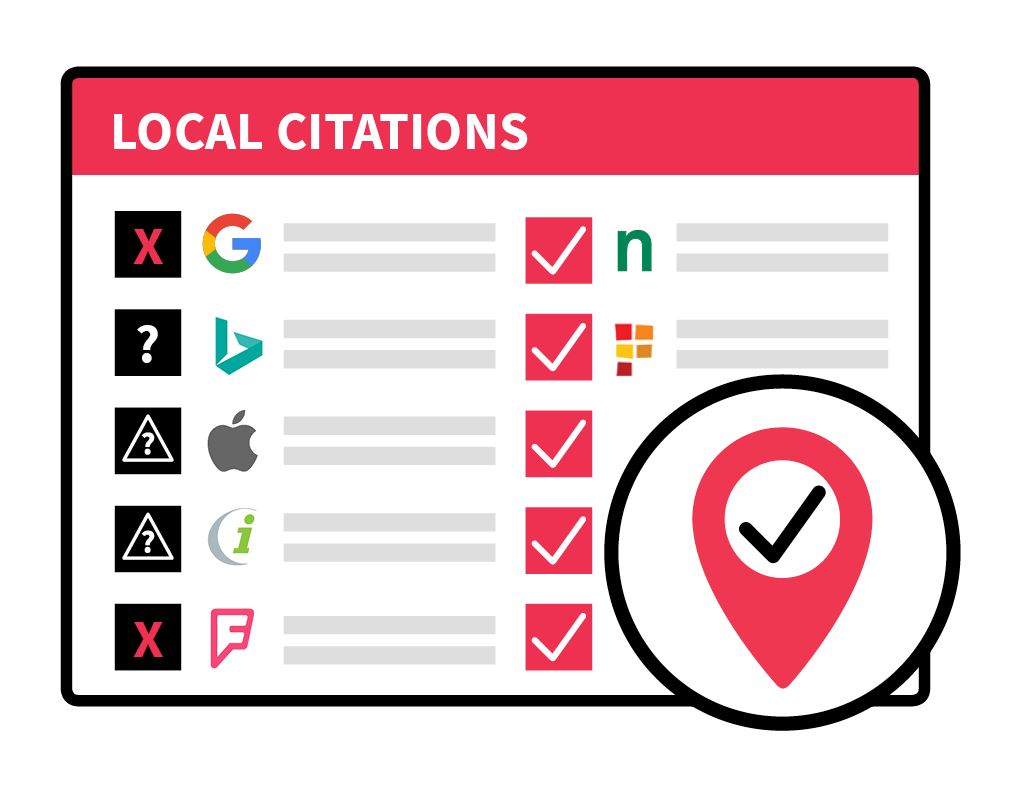
Local citations are online mentions of your business Name, Address, and Phone. They appear on Google Business Profile, Apple Maps, Bing Places, Yelp, Facebook, industry directories, and unstructured sites like news sites or local chamber pages.
Two jobs matter. They confirm your facts to search engines. They distribute those facts where real customers search. Messy citations break both jobs. That hurts clicks, calls, and conversions. One clean version of your NAP, spread everywhere, fixes the leak.
Google calls the core local ranking factors relevance, distance, and prominence. Complete Business Profile info helps relevance. Trusted signals like links and reviews feed prominence. Your address ties to distance. One messy NAP confuses all three at once.
On the consumer side, it is worse. Search Engine Land reported 63 percent of potential customers avoid businesses with inaccurate listings. That is not a small dent. That is a sales leak you can fix this month.
Think of citations as your ID card. Your Business Profile, on-page content, links, reviews, and behavior signals do the heavy lifting once that ID checks out. Authority still wins in competitive niches. After you nail NAP consistency, stack relevant local links to boost your prominence.
The audit process: four clean steps
Step 1. Create your canonical NAP
One business name. One USPS standardized address. One primary local phone number. One website URL. Save this in a shared document. This is your truth source forever.
Use USPS Publication 28 for exact abbreviations. Street becomes ST. Avenue becomes AVE. Suite becomes STE. That standard reduces mismatches across data sources when you sync later.
Next, pull your current listings using one of two solid tools. BrightLocal Citation Tracker scans key directories, flags inconsistencies, and highlights duplicates. Whitespark Local Citation Finder excels at discovering competitor gaps and sorts opportunities by submission difficulty. Pick one and export the results.
Label each listing as correct, incorrect, duplicate, or missing. Keep a column for login ownership and a column for proof. Screenshots help when platforms misfire or revert data.
Step 2. Fix core directories first
Update these locations in this order. Your Google Business Profile. Your website footer and contact page. Apple Maps via Apple Business Connect. Bing Places. Yelp. Facebook.
Once the core set matches your canonical NAP exactly, work through the rest of your directory list using that same structure. Adopt one suite format. Adopt one phone number. Adopt one website URL for primary listings. That consistency lets aggregators and data partners pick up the right record quickly.
Handle platform-specific removals directly:
Google Business Profile: Use Suggest an edit to mark a duplicate location as closed. Keep proof ready. Google’s guidance is at their local ranking page.
Yelp: Open the duplicate page, click Edit, pick Duplicate, and submit with context.
Bing Places: Search for your business, open the duplicate, and use Feedback or close the record from your dashboard after claiming.
Apple Business Connect: Claim your location, then remove or merge the extra record. You can also report an issue if you cannot claim it.
Move through the rest of your list in descending order of authority and usage. Correct the name. Correct address format to USPS style. Correct phone number to your primary number. Fill missing categories, hours, and URLs. Keep notes with date and action taken.
Step 3. Build on quality directories only
Spray-and-pray listing blasts leave you with weak sites and little referral traffic. Focus on sources that users trust and that other platforms cite.
Start with power players: Google Business Profile, Apple Maps, Bing Places, Yelp, Facebook. These typically show first in branded searches. Many aggregators consume their data.
Then add country and industry-specific sites. Whitespark maintains a list of top sources by country with data on usage and submission details. BrightLocal has curated pages that cover lawyers, dentists, home services, restaurants, and more by vertical.
Data aggregators still matter. In the US, Data Axle, Neustar Localeze, and Foursquare distribute your details to many apps and maps. One submission to these sources speeds up propagation and reduces drift over time.
Fill each new listing with consistent NAP, real categories, service descriptions, hours, and photos. Use the same brand tone across profiles. Do not keyword stuff the name field. That breaks Google rules and looks shady.
Step 4. Anchor your site
Your site is where all citations point. Place your canonical NAP in the footer. Mirror it on your contact page. Match hours with your Business Profile and top directories.
Add LocalBusiness structured data in JSON LD. Include at least: name, url, telephone, address (with streetAddress, addressLocality, addressRegion, postalCode, addressCountry), openingHours, geo, sameAs for your top profiles, and priceRange if relevant. The values must match your canonical NAP exactly.
If you need help mapping this to your service and city pages with real query intent, use our guide on local keyword strategy. Clean citations plus targeted pages equals better results for both discovery and conversions.
Directory strategy: pick with intent
Not every directory deserves your time. Before you invest effort, ask five questions.
Does it fit your business type? If you run a dental practice, DentalPlans or Healthgrades matter more than a general site. Use BrightLocal’s industry lists to spot the right niche sources.
Does the site carry authority or distribute data to others? Whitespark breaks down the strength and reach of top sources by country. Prioritize those with strong usage or feeds into other platforms.
Can you control edits? Favor sources where you have control. Ownership prevents reversion to old details. Some sites require phone or postcard verification. Some let you claim and lock it down.
Will the listing send referral traffic? A directory that ranks for your service plus city tends to matter more. Run a quick search. If the directory holds page one for your primary service in your market, keep it. If not, skip it.
Are you already covered through aggregators? Submissions to Data Axle, Neustar Localeze, and Foursquare help distribute the right record. You still need direct claims for top sites. Aggregators speed up cleanup but are not a silver bullet.
When in doubt, pick fewer high-quality listings and invest in better content there. Add fresh photos. Add products. Add services. Add attributes like wheelchair access or parking. Richer profiles convert better and build trust.
Monthly maintenance that sticks
Citations are not set and forget. Data drifts. Aggregators import stale sources. Users suggest edits on Maps that look right but are wrong.
Weekly: Check your Google Business Profile. Google can apply updates from third-party sources. Accept correct changes. Reject the rest. Confirm hours and holiday hours. Confirm services and categories. Upload fresh photos.
Monthly: Run a fresh citation audit with your chosen tool. Fix mismatches. Close new duplicates. Spot check Apple Maps, Bing, Yelp, and Facebook manually. It takes minutes. It stops small errors before they grow.
Ongoing: Ask for reviews on a steady schedule. Whitespark shows that review recency influences local results. Respond to every review with a short human response. That shows real service. It also signals activity.
Keep a log: Track each edit with a date and a note. Save screenshots for big changes. That log becomes proof when a platform reverts data or when you hand off work to a new staff member.
What to avoid
Do not stuff keywords into your business name. That breaks Google rules and risks suspension.
Do not run multiple profiles for one location. Use one profile per real location. Service area businesses should follow Google’s address rules. No fake offices. No coworking with no signage just to gain coverage.
Do not add tracking numbers randomly. If you use a call tracking number, make it your primary in your Business Profile with your main number as additional. Keep the rest of your citations on the main local number.
Do not change address format every quarter. Commit to USPS style everywhere. Small spelling differences create a new record on some platforms. That splits authority. That hurts rankings.
Real world proof points
Google states that complete and accurate Business Profile info improves local results. That is in their official local ranking guidance.
BrightLocal’s research shows that people lose confidence when they meet inconsistent details. Search Engine Land reported 63 percent of consumers are deterred by inaccurate listings. That number matters because it is not theoretical. It is actual behavior.
BrightLocal also found that top-ranking businesses tend to hold more citations than low-ranking peers. It is a correlation, not causation. Use it as a directional guide.
Whitespark’s ranking factor survey puts citations in the base layer alongside Business Profile work, on-page content, links, and reviews. You need all of them working together.
Quick wins you can tackle today
Claim and clean your Google Business Profile. Fill every field you can. Use real categories. Write a plain language description with your prime service and city.
Set your canonical NAP in a shared document using USPS Publication 28. Post that doc inside your team workspace. Tell everyone to use that exact version everywhere.
Fix the top four directories: Apple Maps, Bing Places, Yelp, Facebook. Correct the name, address, phone, and hours. Add at least three current photos to each profile.
Submit to Data Axle, Neustar Localeze, and Foursquare. That speeds up correction across smaller sites and reduces future drift.
Add LocalBusiness schema to your site. Place the same NAP in your footer and contact page. Match hours across all public profiles the same day.
What success looks like
Brand searches show one clean set of details across page one. Maps displays your correct hours, phone, and a link that routes to the right page. You see fewer wrong number calls. You see fewer messages asking if you moved two years ago.
In the Map Pack, you hold steady for core services. Your profile shows consistent photos and recent reviews. You post updates once or twice a month. Each quarter, your citation report shows fewer new errors. That is control. That is how you compound results.
The bigger picture for local growth
Citations set the table. Your Business Profile, on-page content, local links, and review strategy deliver the meal. You need both.
After you complete your audit, move your focus to building authority in your city. Partner with local groups. Sponsor meetups. Pitch helpful stories to local media. Gather links with context, not fluff.
Match that push with smart topic coverage on your site. Service pages for each offer. City pages for priority markets with real substance. Answers to customer questions on a simple FAQ page. Our local keyword strategy article will help you map queries to the right pages so incoming traffic turns into calls and bookings.
The short pitch from Rep Lock Marketing
Clean NAP. Correct citations. Better links. Smarter pages. That is the stack.
If you want a partner to run the audit and manage the monthly grind, Rep Lock Marketing can do that with speed and care. If you prefer to run it in house, use this playbook. Either way, you win. Your customers find you. You stay in the Map Pack longer. That is the goal.
Final thought: You do not need 500 citations. You need the right ones. You do not need fancy hacks. You need clean data everywhere real people search. Nail that. Build authority. Keep your details current. The rest follows.