
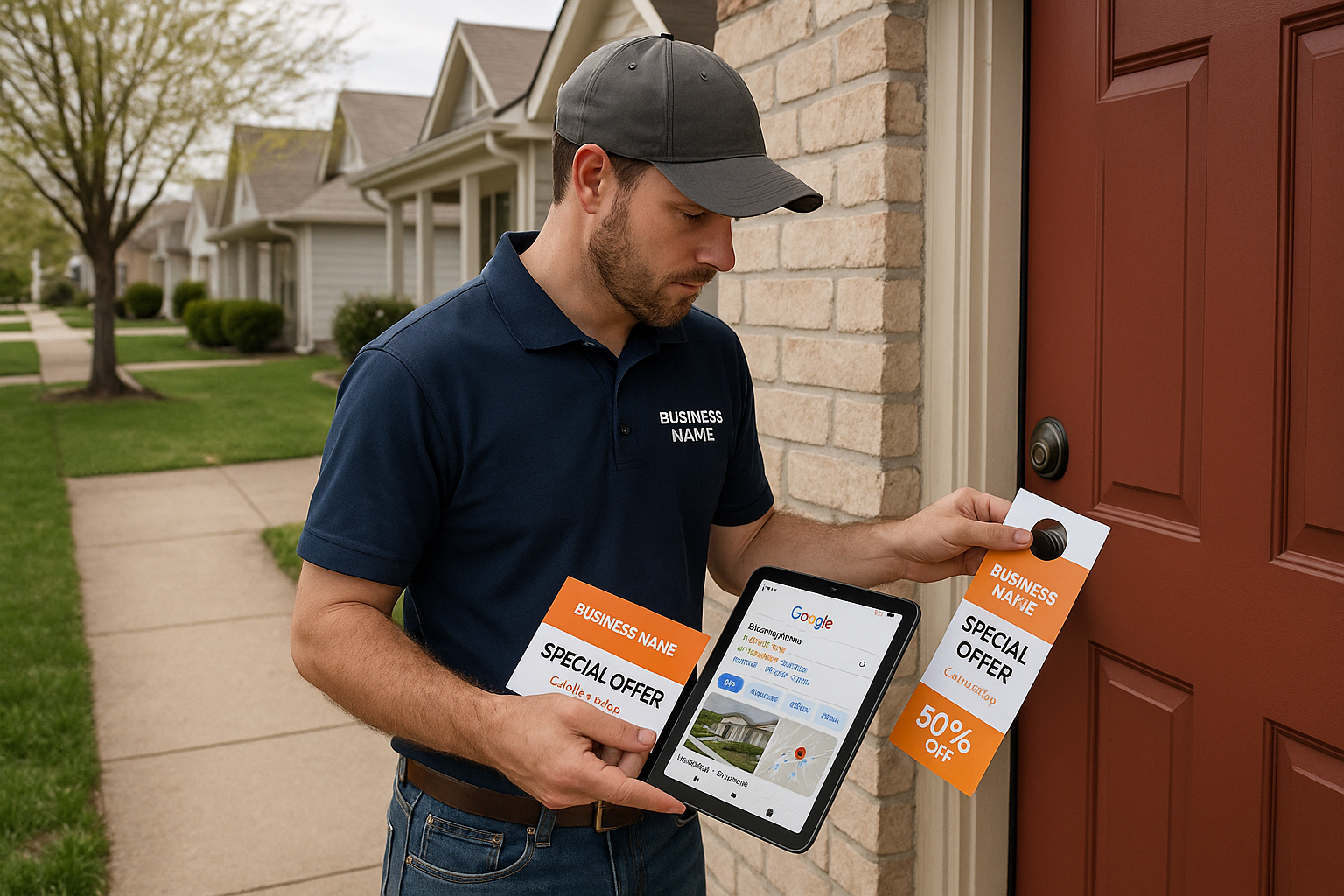
Direct mail is back in the spotlight, and not because we all missed licking stamps. When done right, postcards, door hangers, and neighborhood mailers spark a ripple effect online. More branded searches. More Google Business Profile views. More reviews. That steady stream of real world attention fuels the same signals Google looks at when deciding which business shows up first in the Map Pack. If you want local growth without setting your ad budget on fire, this play is for you.
Why direct mail still moves local SEO
We live on phones, yet the mailbox keeps doing numbers. Fewer interruptions, less noise, and a tactile piece you can hold still works. People glance at a postcard on the kitchen counter more times than they scroll past your fourth Instagram Story. That kind of dwell time is rare with purely digital campaigns. It plants a brand in memory, which is exactly what you need to fuel branded search and repeated Google Business Profile visits.
Mail performance is not guesswork. Industry tracking from JICMAIL through the DMA shows response rates that would make many digital channels blush. Warm audiences can hit mid single digit response in current benchmarks, while cold outreach sits lower yet measurably moves. That is a proper starting point for planning, not a fairy tale. You can read the latest performance notes in the DMA writeup of the JICMAIL Response Rate Tracker for a grounded view of what to expect here.
Postalytics compiled a mountain of fresh data that tells the same story. Direct mail still pulls attention at a rate that outpaces a lot of digital noise. Open style engagement for mailed pieces is high. Response is steady. People keep mail, pass it to a spouse, and take action later. That persistence is perfect for local businesses, since it nudges neighbors to search your name, tap Directions in Google Maps, or call from your profile. If you want to see the data points, the Postalytics roundup is a quick reference here.
Now link that attention with your online footprint. A mailer that points to a clean, consistent Google Business Profile will win more clicks and calls once people reach your listing. Google is clear that review count and review score matter for local ranking. That is straight from the source. Check the Google Business Profile help doc on local ranking signals for the details here. Direct mail creates awareness which pushes profile visits which leads to reviews, calls, and website sessions. Those engagement waves help your local presence grow.
There is a second offline to online effect that gets overlooked. People who just saw your postcard are more likely to type your brand into Google or open Maps and search your name. That branded search activity signals that your business is the one residents want to find. As Scott Sery explains in his writeup on how physical outreach can help SEO, well timed mailers can drive spikes in branded search and click through that add up over time here. Tie those spikes to tracking and you can prove the lift.
How postcards push Google Maps signals
Before talking paper size and glossy finishes, name the real goal. You want online actions that matter for local discovery. Postcards and door hangers can spark the exact actions Google pays attention to in the local stack. Here is the short list of signals you can influence with direct mail.
First signal is branded search. When someone receives your card then types your business name into Google or into Maps, they show intent. A portion of that group clicks your Google Business Profile. Some tap Directions. Some call. A percentage leaves a review after service. Each action feeds the data mix that supports visibility for the next person looking for the same service.
Second signal is profile engagement. Once neighbors hit your listing, your imagery, services, and Q and A should send the right cues. That is where GBP hygiene comes in. Keep your name, address, phone, categories, hours, and services consistent across the web. Guides from LitCommerce and Octiv Digital outline how NAP consistency and review management shape local rank. Those are worth a skim if your profile still needs cleanup. LitCommerce has a practical overview of Maps marketing basics here. Octiv Digital breaks down key local factors with an up to date view here.
Third signal is reviews. Google’s own documentation states that both volume and score play into local rank. That does not mean beg for stars or offer gift cards for praise. It means make it easy to leave a review right after a great experience. When the process is friction free, more happy customers will speak up. Recent updates covered by Search Engine Land show that Google now gives you a QR code that points straight to the add review page for your business. That is perfect for a printed piece. Their writeup explains the feature in plain language here.
Fourth signal is behavioral lift. A neighborhood mailer nudges clicks on your website and taps on your phone number. If you log those actions with UTM tags and unique call tracking numbers, you can attribute calls and sessions to the campaign. That attribution lets you scale confidently. Plus, the engagement itself is a positive signal that you are relevant for local searchers.
Put simply, mail puts you on the fridge. The fridge puts you in search. Then Google sees a business that neighbors know and prefer. That is how postcards end up lifting your position in Maps.
What to print and what to track
A pretty postcard without a clear path to action is a coaster. A door hanger without tracking is guesswork. Build your piece around one or two goals. Then give people the fastest route to complete that action on a phone. The copy, the QR, the URL, and the phone number should all support that plan.
If the goal is more reviews, point the QR to the Google add review page. Google now offers a review QR code inside the Business Profile tools, and Search Engine Land documented the roll out. That means you can place a scannable code on the card that drops someone straight into the review screen. No hunting. No extra taps. That keeps the path short for customers who already like you. The coverage sits right here on Search Engine Land. For those who prefer typing a link, add a short vanity URL such as yourbizreview dot com that redirects to your review link with UTM tags.
If the goal is more profile visits, tell people exactly what to do. Invite them to search your business name on Google Maps to see current work and honest reviews. Make that ask bold on the front. Then give a vanity URL on the back for anyone who wants to click through a special page. That page should include a map embed, a button to your GBP, and a quick contact widget. Tag the link with UTM parameters so you can count sessions and conversions.
Use a call tracking number made for direct mail. It forwards to your main line, yet logs the call as coming from the postcard. That single tweak lets you see how the phone actually rang in the week after homes received the piece. Do not swap out your number on the Google Business Profile though. Use the tracking number only on the mailer and on the landing page tied to that mailer. Keep your published NAP consistent across your citations, your website, and your GBPs. You want the mailer to reinforce your core NAP, not create variation. LitCommerce covers why NAP consistency matters here.
Always add your NAP on the card itself. Full business name. Street address if you serve walk ins or if it helps trust. Primary phone. The URL you want people to use. That simple repetition strengthens recognition for humans and helps reduce confusion for anyone searching variations of your name.
Test formats to fit the neighborhood. Postcards sized 4 by 6 tuck inside stacks yet still get read. Larger 6 by 9 cards give your QR and offers more breathing room. Door hangers work for hyper local service businesses since you can map delivery to streets right around a job site. Time your drops near events that already push demand such as the start of a season or a local home show.
If you want extra reach, consider USPS Informed Delivery. People who opted in get a preview of incoming mail in email. That gives your card a second touch in the inbox before it hits the mailbox. Use a simple image and keep the headline short so it carries well on mobile. Treat it as a test. Not a cornerstone.
Track everything cleanly. Use UTM links like this example for a review page redirect. It is easy to read and easy to filter inside analytics. Just replace the domain with yours.
https://yourwebsite.com/review?utm_source=postcard&utm_medium=directmail&utm_campaign=neighborhood_spring25
Want to attribute more than web sessions. Add events for QR scans using your QR generator analytics. Log calls with your call tracking. Then correlate with Google Business Profile Insights for Searches and Views. You will see the wave hit in the weeks after delivery.
Set expectations with the right audience. Warm lists made up of current or recent customers usually respond stronger than cold neighborhoods. The DMA shares that warm outreach often lands in the mid single digits while cold pieces tend to sit near one percent. That range from JICMAIL guides your ROI thinking. Their latest summary is available here. Postalytics adds context by industry and format here.
Creative examples and micro copy
Your card has one job. Get the right person to take one action. Punchy writing wins that moment. Clarity beats cute. Still, you can work in a little personality without confusing the call to action.
For service businesses where reviews carry the sale, make the QR the hero. Use a headline that invites a quick tap from happy customers. Below are sample lines that fit on a small card yet pull real work online.
Front headline: Loved our work. Scan to post a quick Google review
Back headline: One minute. Honest words. Big help to our small business
Fine print that is not sneaky: No perks for reviews. Just gratitude
For lead generation, drive people to your profile to see social proof plus an easy booking link. Keep the first impression friendly with a clear next step.
Front headline: Neighbors pick us for fast service. Search our name on Google Maps
Subhead: Or scan for a booking link and our latest reviews
For door hangers near active job sites, build copy that ties to the work next door. Keep it neighborly.
Front headline: We just finished at your neighbor’s place. Scan to see the before and after gallery
Back headline: Need help this week. Text or call. We are ready
For professional practices, reassure with credentials and reviews, then give an easy way to request an appointment.
Front headline: Five star care from a team you can reach today
Subhead: Scan to see reviews and request a visit
Creative tips that keep response high. Use one focal image per side. Keep the logo large enough to lock in brand recall. Place the QR on a light background with a short label. Say exactly where the QR goes. Google review page. Maps listing. Booking page. Do not make people guess. If you include a promo code, use it only to attribute direct mail bookings, not as a trade for reviews. More on that in the policy section.
Micro copy that guides scanning can be fun without getting in the way. Try lines like Scan me. I am faster than typing or QR goes straight to our review page. Tap stars. Type a line. Done. If your audience skews older, add a tiny line that says Open your camera and point at the code. It auto opens the link.
Measurement and KPIs that matter
Direct mail that helps local SEO is not art for art’s sake. It needs an audit trail that shows lift. Set a baseline, launch your drop, then watch both your site data and your GBP data. Do not try to read tea leaves in a day. Give it a few weeks to settle, since reviews and follow up service calls will trickle in.
Start with a snapshot of your Google Business Profile. Record Views, Searches, and Actions for the prior month. Pull current review count and average rating. Note your current average position for your main service terms in Maps if you track positions. On site, record visits by channel and current conversion rate for your main contact form or booking flow. On the phone side, get a baseline for weekly inbound calls.
During the campaign, watch UTM tagged sessions from your vanity URL, QR scans from your generator, and calls to the tracking number you printed. Keep an eye on new reviews in the thirty days after service, not just the first week. Many customers will post once the job is completed. Track review velocity in a simple sheet. If you add ten fresh reviews over a month when you usually add two, that is a meaningful change. Google’s help page confirms that both count and score influence ranking in local results, so review growth is not just nice to have source.
Expect to see an uptick in GBP Searches for your brand name plus more profile Views. That rise may begin within the first couple of weeks. Ranking movements will depend on how competitive your category is in your city. If you are in a heated niche, you might need a couple of mail cycles to see movement that sticks. Keep your on page work tight during this time. Clean NAP across the web. Fresh photos on your profile. Timely replies to reviews. Current products and services. LitCommerce’s guide and Octiv Digital’s ranking factor summary both help keep that house in order LitCommerce Octiv Digital.
ROI math can be straightforward. Total printing, list, and postage divided by the number of leads attributed to that mail drop gives you cost per lead. Your call tracking and UTM links do the heavy lifting here. Compare that figure to your paid search cost per lead. In many local categories, mail will compete well, with the bonus of feeding your Google review growth at the same time.
One more tip for the measurement nerds. Layer your mail schedule with a calendar entry to tag delivery week. When you look back at GBP Insights or analytics, you will see campaign windows at a glance. That makes it easier to stack the results of two or three tests and decide what to scale.
Compliance and best practices
Want to keep your reviews and your listing safe. Play it straight. Google has been loud about fighting fake or manipulated contributions on Maps. Their blog explains how they catch fraud and remove low quality content here. Policy summaries make the same point. Incentivized reviews are not allowed. If you hand out gift cards or discounts for praise, you invite removal or worse. You can read a recent policy update summary right here policy coverage.
What does a clean direct mail review ask look like. Keep the request polite, not pushy. Never promise perks in exchange for stars. Use plain language that invites honest feedback, regardless of rating. Make the path easy with a QR that lands on the Google review screen. Follow up after service with a short text or email that thanks the customer and includes the same link. That two step approach yields a steady flow of real feedback without stepping on any policy line.
A few do items to keep you safe. Keep your NAP consistent everywhere. Include your real business name as registered. If you use call tracking on mail, do not use that number in your GBP. Reply to reviews, good or bad, in a calm tone. Ask for reviews only from real customers. If you suspect a fake review, flag it through the official channel. This careful posture protects your profile and the review lift you just earned.
A few do not items. Do not ask employees or relatives to post praise unless they are genuine customers writing from their own experience. Do not gate reviews by sending happy customers to Google and unhappy customers to a private form. Do not spam neighborhoods every week with the same message. Fatigue kills response. Rotate your creative and space the drops.
Add this play to your Rep Lock plan
If you want a team that lives in local growth, that is us. Rep Lock Marketing builds campaigns that tie the fridge to the feed without wasting a dollar. We pair direct mail with tracking and clean GBP work so you can watch the lift in real time. Our services cover paid media, creative, listings, and review systems for both local and nationwide SEO. See how we work and book a quick consult right here.
Curious how we got here. The Rep Lock story spans scrappy tests and client wins that turned into a method we use daily. If you enjoy a behind the scenes read, start with the Rep Lock story or case study on this page.
We build locally with pride. Our Austin recognition means a lot to us, because it came from the community we serve. Catch the EASTside Magazine spotlight for a quick look at the people behind the work right here.
Before you mail a single piece, run through this short checklist so the offline push sends the strongest possible signal online. Your Google Business Profile is clean with current categories, correct hours, and accurate NAP. You have your review link and QR ready. Your vanity URL redirects to a mobile friendly page with UTM tags. Your call tracking number forwards smoothly with voicemail set. Your card has one clear call to action with a plain headline and a readable QR label. Your follow up workflow is ready to thank customers and ask for honest feedback after service. Get those parts right, and you will see the connection between paper and pixels show up in your numbers.
Direct mail plus local SEO is not a gimmick. It is a steady offline touch that pushes real activity online. That activity strengthens the same signals that make the Map Pack tilt in your favor. Add the QR. Add the tracking. Keep your house clean on Google. Then let your neighborhood know you are ready for their call.