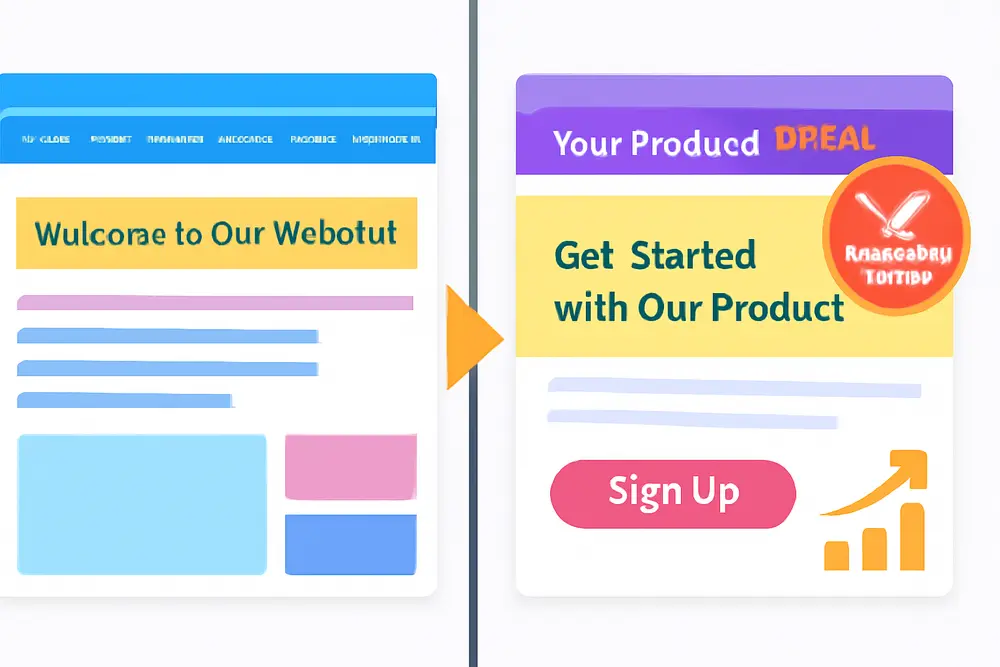
Choosing whether to send PPC traffic to your homepage or a focused landing page comes down to intent, keyword type, and offer. Get this right and you unlock better message match, tighter funnel alignment, improved Quality Score, and a conversion rate that finally pulls its weight. Get it wrong and you burn budget on curious clicks that fizzle before they ever hit your form or checkout. This guide gives you a fast, practical framework to route traffic with confidence and stop forcing square searches into round pages.
What Is Message Match?
Message match is the tight alignment between a user’s query, your ad copy, and the content on the page they land on. In plain English: if someone searches “roof leak repair near me,” your ad should speak to roof leak repair and your page headline should say roof leak repair, not just “Residential Roofing.” When keyword, ad, and page headline line up, you reduce friction and give the clicker instant proof they’re in the right place. That alignment also feeds the “Ad Relevance” and “Landing Page Experience” parts of Google’s Quality Score, which can lift performance across the board. For deeper context on relevance and Quality Score components, see resources like this overview of landing page relevance and this breakdown of Quality Score.
Homepage vs. Landing Page Basics
Your homepage introduces your brand and directs visitors to lots of different paths. It’s designed for browsing and discovery. A landing page is built to do one job well: convert traffic driven by a specific promise in your ad. The more specific the keyword and offer, the less your homepage will help. Sending high-intent traffic to a generic homepage usually lowers message match, confuses the clicker, and drags down Quality Score. Authority sources like Lyra PPC’s Quality Score guide underscore how tight relevance from query to page impacts results.
When Should You Use Your Homepage?
There are times when your homepage is a perfectly fine destination. If someone searches your brand name or a navigational query like “[Brand] login” or “[Brand] pricing,” your homepage or a core hub page gives them the broad context and navigation they expect. Early top-of-funnel traffic from broader info-seeking keywords can also make sense on a homepage when there isn’t a specific offer, as long as your homepage has clear next steps.
That said, recognize the risks. Homepages are inherently general, which can dilute your call-to-action and make it harder for visitors to find the exact path promised in the ad. If your homepage is slow, packed with competing links, or light on proof, it can hurt both conversions and your “Landing Page Experience” signal. We frequently see the same problems in site audits: vague CTAs, thin trust signals, and mobile friction.
When Is a Landing Page Better?
Any time your ad promises something specific, a landing page is your best friend. If you lead with “Free Consultation,” “20 percent off,” “Same-day installation,” “Book a demo,” or “Get a free estimate,” the landing page should present that exact promise above the fold. That level of message match shortens the path to value, reduces bounce rate, and increases the odds your visitor completes the intended action.
Landing pages shine for transactional intent keywords, mid-funnel comparison searches, and bottom-funnel product or service terms. They’re also ideal for remarketing when you tailor the offer to what someone previously viewed. Build them to match a tightly themed ad group, speak to one core pain or desire, show the proof that matters, and present a single, obvious next step.
Quick Decision Framework
Use the quick table below to decide where to send your clicks. It’s not a law of nature, but it will keep your funnel alignment clean and your message match tight.
| Decision Factor | Homepage | Focused Landing Page |
|---|---|---|
| Keyword Type – Search Intent | Brand terms – navigational queries | Transactional – specific product or service – promotional |
| Funnel Stage | Top of funnel – awareness | Mid to bottom funnel – offer in play |
| Offer | General value – no specific offer | Promotions – free trials – demos – gated content |
| Expected Message Match | Lower – broad and general | High – mirrors ad promise exactly |
| Quality Score Impact | Risk to Ad Relevance and Landing Page Experience | Higher potential via stronger relevance |
Fast rules to apply now:
- If your ad includes a specific offer, send traffic to a landing page that features that offer instantly.
- If the query is broad or brand-driven, the homepage can work if navigation and UX are clear.
- For any high-value campaign, test both destinations and let the data pick your winner.
Examples by Business Type
Here’s how the decision plays out across different models. The thread through all of them is message match and funnel alignment. Match the promise and the visitor’s stage, not your org chart.
Local service business: A search for “emergency plumber near me” is a bottom-funnel, high-urgency query. If your ad says “24-7 emergency plumber – 45 minute arrival,” your landing page headline should say “24-7 Emergency Plumber – We Arrive in 45 Minutes.” Show service areas, a tap-to-call button, today’s availability, and a short form. Do not send this click to a homepage that leads with “Welcome to Johnson Plumbing.”
Ecommerce: If someone searches “men’s waterproof hiking boots size 12,” your ad group should be tightly themed to waterproof hiking boots, and the landing destination should be the filtered category or the exact product if you promoted a single SKU. A homepage that features new seasonal apparel confuses intent. If you are running a limited-time promotion like “Buy 2 Get 1,” lead with that in the ad and show the terms upfront on the landing page.
B2B SaaS: Mid-funnel searches like “best CRM for real estate teams” or “CRM with texting” call for a comparison-focused landing page that highlights the feature, industry fit, and a clear “Book a demo.” If you promise “14-day free trial,” the landing page should put that front and center with frictionless onboarding details. The homepage can support brand searches and very broad category queries but will struggle to convert specific solution-seeking traffic.
Multi-service firm: If you run PPC for multiple services, resist the urge to route everything to the homepage. Build modular landing page templates per service line. Templated, service-specific landing pages also make testing faster and scale better than throwing all clicks at a one-size-fits-none homepage.
Quality Score and Cost Impact
Quality Score is a 1 to 10 number reported at the keyword level and shaped by expected CTR, Ad Relevance, and Landing Page Experience. Two of those three inputs are directly improved when you nail message match. A landing page that mirrors the ad promise can raise Ad Relevance and improve Landing Page Experience by demonstrating topical alignment, speed, mobile friendliness, and trustworthy content. Learn more about how each component influences your costs and visibility in resources like this Quality Score primer.
Why it matters: better Quality Scores can help you win auctions with lower bids, lower your average CPC, and increase impression share for the right clicks. On the flip side, a mismatch between specific keywords and a generic homepage can depress Ad Relevance and Landing Page Experience, forcing you to pay more to keep up. Relevance is not just a conversion play. It’s a cost control play.
Best Practices for Message Match
Tighten your ad groups. Group keywords by intent and theme so the ad copy and destination page can echo the exact language. If you’re still stuffing 50 loosely related keywords into one ad group, your relevancy and CTR will suffer.
Mirror the search in your headline. If the user typed “roof replacement financing,” your ad headline and landing page H1 should use that phrase or its closest variant. Put the offer above the fold. If the ad promises “0 percent APR for 12 months,” do not bury the details three scrolls down.
Trim the navigation and distractions. Your landing page should prioritize one action and remove any competing elements that steal attention without adding trust. This does not mean you must nuke all navigation, but you should weigh every link against the job of the page.
Load fast and design mobile first. Page speed and mobile usability feed the Landing Page Experience signal and directly affect real humans deciding whether to wait or bounce. Keep total weight down, defer non-essential scripts, and test on real devices.
Show proof before you ask. Add social proof, case snippets, star ratings, logos, or a short testimonial near the primary CTA. If you’re asking for a demo request, show the payoff for the 15 minutes they’ll invest.
Use negative keywords and tighter match types. Cleaning up irrelevant queries is the cheapest conversion rate optimization move you’ll ever make. For a smart look at how negatives influence landing page quality and results, see this discussion of negative keywords and hidden conversion killers.
Make forms humane. Ask for exactly what you need to qualify and contact the lead. If you must ask for more, state why you need it and what they’ll get in return. Inline validation and fewer required fields can lift completion rates immediately.
How to Test Home vs. Landing
If you have a material campaign and the right traffic volume, set up an experiment to split traffic between your homepage and a purpose-built landing page. Keep everything else as consistent as possible. Same keywords, same ad copy themes, same bid strategy. The goal is to isolate the destination effect and see which path wins for your specific audience and offer.
Run the test long enough to collect reliable data. Watch conversion rate, cost per conversion, return on ad spend, bounce rate, and page load time. Keep an eye on Quality Score at the keyword level, especially the Ad Relevance and Landing Page Experience components. If the landing page version beats the homepage on both conversion rate and cost per conversion while raising Quality Score, you have a clear direction. If results are mixed, refine the message match on the landing page or segment keywords more tightly and re-test.
PPC Message Match FAQ
Can I ever send non-brand keywords to my homepage?
Yes, in limited cases where intent is broad, there’s no specific offer, and your homepage is designed to guide users quickly to the right path. You’ll still want to monitor Ad Relevance and Landing Page Experience and compare against a tailored landing page in a controlled test.
What if my homepage already converts well?
Great, keep using it for the traffic where it wins. Then build a landing page version that mirrors your best-performing homepage elements and swap it in for more specific keywords or offers. Let the data decide, not a hunch.
Do I need a unique page for every keyword?
No. Build pages for tightly grouped themes and intent clusters rather than every single keyword. The key is clarity: one primary job per page, not a dumping ground for five different intents.
Will better message match always lower CPC?
Not always, but it often helps by improving Quality Score signals and boosting CTR. Even when CPC does not drop, higher conversion rates typically reduce your cost per acquisition and improve overall efficiency.
Action Steps You Can Take Today
Map your keywords by intent. Label them as top-, mid-, or bottom-funnel and decide which deserve a focused landing page. Bottom-funnel and offer-driven terms usually go straight to landing pages. Brand and broad category terms can go to your homepage if the experience is strong.
Audit message match from query to ad to page. Rewrite your top ad groups so headlines mirror the most common queries. Build or revise landing pages so the headline and first call-to-action echo the ad promise precisely.
Create one high-quality landing page template per offer type. For example, one for free consultations, one for discounts, one for demos or trials, and one for gated content. Modular templates help you launch fast and keep your funnel alignment tidy.
Harden the UX. Compress images, simplify forms, clarify CTAs, and bring trust elements forward.
Clean your queries. Add negatives where you see consistent irrelevance and consider moving from broad to phrase or exact match when your budget demands tighter control. This lets your landing pages shine for the intent that actually buys.
Test and iterate. Spin up a simple controlled experiment pitting homepage vs. landing page for a single high-impact ad group. Track Quality Score, conversion rate, and cost per acquisition side by side. Use what you learn to roll out across campaigns.