If you want your phone to ring with real local customers, Google Local Services Ads are the fast lane. But LSA works a little differently than standard PPC. You earn position with trust signals and performance, not just budget. This guide shows you how to pass LSA verification, pick the right categories and budget, use reviews to climb rankings, dispute junk leads, and build a rapid-response workflow that turns those calls and messages into booked jobs.
What Are Google Local Services Ads?
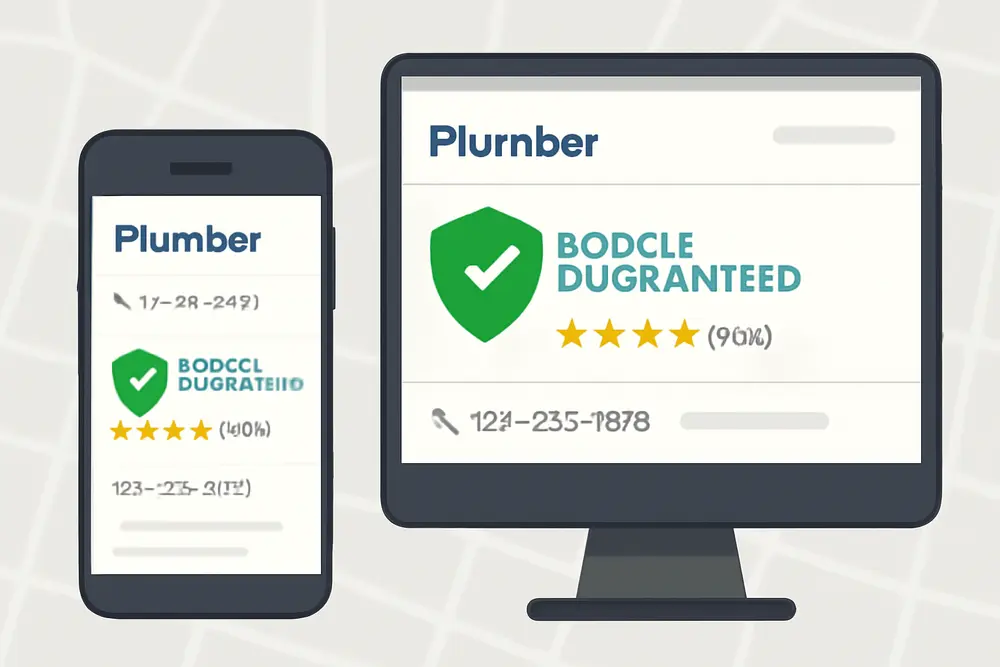
Local Services Ads sit at the very top of Google for high-intent searches like “roof repair near me” or “injury lawyer near me.” You pay per lead, not per click. Your profile carries a Google Guaranteed or Google Screened badge after LSA verification, which is a trust signal for customers and a prerequisite to show in many categories. Ranking is influenced by proximity, reviews, responsiveness, booking behavior, and profile quality, not only by budget. That mix makes LSA both a performance channel and a reputation channel.
Step 1: LSA Verification
Verification is the gateway. Without it, you won’t get the badge or the volume. The process checks your legal legitimacy and customer safety. Expect to provide business registration, owner information, service licenses, and active insurance. Some categories require background checks for owners and, in certain markets, for field staff who enter homes. Verification times vary by category and market, but many accounts clear within 2 to 14 business days if documents are ready and names match across records.
Start in the LSA dashboard and select your category. You’ll be prompted to upload documents and complete attestations. Make sure your business name, address, and phone are consistent across your website and your Google Business Profile. If your NAP is sloppy, you’ll run into delays. If you need a quick NAP tune-up, use these tips on citation consistency.
Insurance must be current and meet minimum coverage required for your category. Licenses must be valid in the jurisdictions you serve. If a license displays your personal name but your LSA profile shows a DBA, add supporting documentation that ties them together. For background checks, make sure the legal name matches your photo ID exactly and that birthdates are entered correctly. Typos here are the most common stall.
If verification stalls, open a case in LSA support with screenshots of your dashboard and copies of requested documents. Keep your responses in one thread and reply within one business day. Fast follow-up is a signal you’ll replicate later with customers, and it keeps your file moving.
Step 2: Categories and Budget
Picking categories is not “the more the better.” Choose the services you actually perform, prioritize high-intent jobs, and pause categories that drive noise. In plumbing, for example, “water heater repair” and “emergency plumber” typically produce stronger booked rates than a broad “plumber general.” In legal, “car accident attorney” may outperform “personal injury” in some markets. Start narrow, then expand with data.
Budgets in LSA are weekly and you’re charged per valid lead. Many markets provide two bid options: Maximize Leads and Max Per Lead. Maximize Leads lets Google flex bids to get you the most volume for your budget. Max Per Lead sets a ceiling on what you’ll pay for a lead. In competitive markets, a low max-per-lead cap can suppress visibility. It’s smart to test both, but if your calendar can handle more calls, Maximize Leads often wins early. According to agency playbooks, your budget must be sufficient for a few leads per day to stabilize delivery. If you only afford one lead every few days, you’ll struggle to rise against competitors who feed more data into the system.
Service area and proximity still matter. Don’t paint the entire state if you only want jobs within 20 miles. Tighten your radius to where you can show up fast. Being close to the searcher is a ranking factor, and you’ll close more when driving time is reasonable.
Step 3: LSA Ranking Factors That Matter
LSA ranking is a blend of trust, relevance, and performance. Reviews are a big lever. The more high-quality, recent reviews you have, the better. Aim for an average rating of 4.8 or higher if possible. Recency matters. Ten reviews this month beats fifty from last year. Respond to every review quickly and professionally, which shows active customer care.
Responsiveness may be the single most controllable factor. Fast replies to calls and messages during business hours signal reliability to Google and customers. If you miss calls or let messages sit, you’ll slip. Agencies tracking LSA performance note that response speed and consistency during your stated hours strongly correlate with visibility.
Booking behavior counts. Mark leads as booked or completed, and avoid declining legitimate leads unless clearly unqualified. A healthy acceptance and booking rate tell the system you’re a good match for what it’s sending. If you chronically ignore leads or never book, your rank will sag.
Dispute behavior helps quality. Mark invalid leads and use the dispute flow properly. Over time, that feedback reduces junk and can support ranking by improving your lead acceptance ratio and the match between your ads and the right searchers.
Profile completeness influences trust. Fill out every field: years in business, services offered, hours, photos, service areas, and any special attributes like 24-7 availability. Keep your Google Business Profile consistent with the same hours, services, and photos. Inconsistent details can choke conversion even if you rank well.
Budget does matter, but it’s not pay-to-win. A bigger weekly budget gives Google room to test and learn where you fit, but it won’t overcome terrible reviews or slow response. Proximity, competition density, and operating hours still shape what you can realistically achieve in your market.
Step 4: Reviews That Lift Your Rank
LSA reviews are their own currency. You can request reviews from LSA leads through your dashboard, and Google can sync some reviews from your Business Profile. To stack the deck, build a repeatable ask. At the end of every job, send a short message with your LSA review link and a reminder that photos help other customers choose. Mention specific work you did so your customer knows what to write about. Then follow up once more within 3 days.
Respond to every review. Thank happy customers and address concerns with empathy and specifics. Avoid canned replies. If someone mentions your tech by name, echo that to humanize the brand. Replying within 48 hours is a strong target, and within 24 hours is even better. According to multiple agency guides, response rate and recency are part of LSA ranking factors and conversion.
Add photos of your team, branded vehicles, finished projects, and before-and-after shots. People buy what they can see. While the LSA profile is lighter than GBP, the visual proof you post to your Business Profile supports conversion for LSA traffic that clicks through to learn more. Use our GBP optimization tips to keep that photo library fresh.
If your rating slipped, stabilize before you scale. Fix the root causes of low-star reviews: missed appointments, poor communication, or surprise pricing. Use call recordings to coach your team, and follow up with customers after resolution to request an updated review if appropriate.
Step 5: Screen Leads and Dispute
Not every lead is valid. Your job is to handle real opportunities quickly and flag the rest. Clear screening protects your budget, clarifies your position in Google’s system, and improves what you receive next month. Use the LSA dashboard or app to mark leads as booked, completed, or disputed as needed.
| Lead Type | Examples | Action |
|---|---|---|
| Valid | Within service area, matches selected category, real customer with job intent | Respond fast, qualify, and schedule. Mark as booked when set. |
| Invalid | Outside service area, wrong service type, spam or solicitation, duplicate lead from same customer, wrong number | Mark as invalid and submit a dispute with call notes or screenshots. |
Disputes are not just about credits. They train the algorithm about which searches and customers fit you. Provide specific reasons, reference the call time, and include a short transcript line if it helps. Keep your categories tight to reduce mismatches. If you keep getting the wrong jobs, uncheck that service in your profile or adjust your ad scheduling to match the hours you can actually answer.
Review patterns monthly. If 30 percent of your leads are invalid because they’re just outside your radius, refine your service area. If a particular category drives tire kickers, pause it for 2 weeks and focus on categories with higher booking rates.
Step 6: Build a Fast Intake Workflow
LSA rewards operators who respond in minutes, not hours. That means live coverage during your stated business hours and a plan for after-hours. If your crew is on ladders or in court, put a dedicated coordinator or answering service on LSA duty. Calls should be picked up in under 3 rings and messages answered in under 5 minutes. If you can’t staff it, adjust your ad schedule to the windows you can cover.
Give your team a script that qualifies and books fast without sounding robotic. Start with name, location, and the exact service needed. Confirm timing, budget range if relevant, and any safety or urgency details. Keep the questions tight and end with a clear next step like a calendar invite or technician ETA. Here’s a lightweight framework you can tailor:
- “Hi, this is [Name] with [Company]. I saw your request about [service]. Are you still looking for help today?”
- “What’s the address and the best callback number in case we get disconnected?”
- “Can you describe the issue in one or two sentences so I send the right tech?”
- “We can get someone there by [time window]. Does that work?”
- “Great, you’ll get a confirmation text in 60 seconds. Anything else we should know before arrival?”
For messages, use quick replies in the LSA app. A starter reply like “Thanks for reaching out. I can help with [service]. Are you available for a call now, or would you prefer to book for [time window]?” gets the conversation moving. If they ghost, send a gentle follow-up within 10 minutes and one more within 2 hours. After that, move on and mark appropriately.
Missed calls happen. Set up immediate callbacks and a short apology text: “Sorry we missed you. This is [Company]. We can help with [service] today. Can I call you now?” Track your missed-call rate and aim to keep it minimal. If you’re missing more than 10 percent of LSA calls, scale back hours or add coverage.
Mark outcomes inside LSA. When a job is scheduled, mark as booked. When completed, mark as completed and send the review request. When unqualified, mark as not booked and note why. The more accurate your statuses, the better Google understands your capacity and fit.
Route everything into a CRM or spreadsheet. Track source as “LSA,” outcome, revenue, cost per lead, cost per booked job, and review requested/received. Close the loop weekly so you can make informed adjustments rather than guessing.
Step 7: Monitor and Scale
Quality beats volume, then volume turns into dominance. Start by establishing baseline metrics: average response time, missed-call rate, percent of leads booked, percent disputed, cost per lead, cost per booked job, review count and average rating, and number of fresh reviews in the last 30 days. Review these every week. If response time slips or the booking rate dips, fix the workflow before you raise the budget.
Scale budgets in measured steps. Increase weekly budget by 15 to 25 percent and watch what happens for 2 weeks. If cost per booked job holds steady and your team can handle the load, increase again. If lead quality drops, tighten categories or service area and use disputes to steer Google back to the right jobs.
Test ad schedules. If you book better in early mornings or evenings, put more coverage there. If you try 24-7 availability, make sure you truly answer 24-7. Google’s own updates and multiple agency studies emphasize consistent responsiveness during your stated hours as a key signal. Being “open” but not answering is a quick way to slide down the pack.
Refresh your profile monthly. Update photos, adjust service areas if you grew, and add any new licenses or certifications. Keep your GBP in sync to avoid confusing customers who click through. If you need a checklist for Google Business Profile improvements, bookmark our 25-point guide.
Track competitors casually. Note their average ratings, review counts, hours, and message responsiveness. If they leapfrog you, look at your recency of reviews and response time first. Those are the fastest levers to move.
LSA FAQ
What is LSA verification?
LSA verification is Google’s screening process that checks your business legitimacy and safety. Depending on category, it includes license and insurance verification and background checks for owners and sometimes staff. Passing verification unlocks the Google Guaranteed or Google Screened badge and lets your ads run at the top of search.
How long does LSA verification take?
Most straightforward cases clear in 2 to 14 business days after you submit clean documentation. Background checks and license validation can add time, and mismatched names are the most common slowdown. Respond to any support requests quickly to keep your file active.
What LSA ranking factors matter most?
Review score and recency, response speed, booking and acceptance rates, proximity to the searcher, and profile completeness. Budgets help with delivery and testing, but poor responsiveness or a weak rating will cap you. Industry resources consistently point to response speed as a highly controllable lever.
What should my weekly budget be?
Set a weekly budget that can fund a few leads per day in your market, then adjust with data. If you can only afford one or two leads per week, it’s hard for Google to learn where you fit and for you to build momentum. Increase budgets gradually and watch cost per booked job.
Does answering after hours help my rank?
Yes, if you truly answer. If you extend hours but miss calls or respond slowly, that can hurt. Align your ad schedule with the windows you can cover in under 5 minutes for messages and in under 3 rings for calls.
How do I get more LSA reviews?
Ask every booked job through the LSA dashboard, follow up within 3 days, and include a friendly note about how photos help other customers. Respond to all reviews, and keep your Business Profile optimized with photos and service details to support conversion.
Is Maximize Leads or Max Per Lead better?
It depends on your goals and market. Maximize Leads generally helps you scale faster when your team can handle more calls. Max Per Lead gives you tighter cost control but can reduce visibility if the cap is below what the market demands. Test both and pick the one that produces the better cost per booked job.
Does disputing bad leads affect rank?
It can help by improving your lead mix. Proper disputes signal which leads do not match your services or service area. Over time, that feedback supports better targeting and can improve acceptance rates, which tie into performance signals.
Your Next Three Moves
First, complete LSA verification with clean, matching documents and align your NAP everywhere using this NAP checklist. Second, narrow your categories to the jobs you want most, set a weekly budget you can actually staff, and switch on Maximize Leads for two weeks to gather data. Third, put a human on the front line to answer in under 5 minutes, send two-part review requests on every completed job, and dispute junk leads with specific notes. Do that consistently and you’ll see more calls, better rank, and more booked work.