If you want to rank in local search and be known as the business that actually knows the neighborhood, build a locals guide. This is your living, breathing community resource guide that highlights nearby spots, upcoming events, smart parking and accessibility tips, and a map visitors will actually use. Done right, it earns natural backlinks, boosts your relevance for near me searches, and positions your brand as a trusted community resource that people bookmark and share.
Why A Locals Guide Works
Local search is driven by proximity, relevance, and authority. A well-structured locals guide quietly checks all three boxes. It signals proximity because your content clusters around neighborhoods, intersections, and landmarks. It signals relevance because the page solves real local intent: where to go, how to get there, and what to expect. It signals authority because other local businesses, event organizers, and news outlets are willing to cite and link to it.
There is another benefit most businesses overlook. A guide gives you a platform to show genuine community involvement. If you volunteer, sponsor, or partner with neighbors, your guide becomes the home base where those stories live.
What To Include In Your Guide
Start with the essentials that make your guide not just pretty, but truly useful to locals and visitors. Think like a concierge, not a brochure. Feature the offbeat gems that only locals know, the events that bring people together, the practical info that reduces friction, and the map that ties it all together. Go deeper than a directory and add why locals love each spot, insider tips, and accessibility notes.
| Component | Why It Matters | Build Tips |
|---|---|---|
| Local Gems | Stands out from generic lists and shows neighborhood expertise. | Feature owner stories, photos, and a one-line “why locals love it.” |
| Events Calendar | Fresh, timely content that earns shares and links. | Include dates, map pins, transit notes, and parking advice. |
| Parking & Accessibility | Solves high-intent searches and improves user experience. | Call out ramps, elevators, lots, meters, and best arrival windows. |
| Interactive Map | Increases time on page and makes your guide more linkable. | Use Google Maps or Mapbox with category layers and neighborhoods. |
| Neighborhood Profiles | Captures long-tail searches across micro-areas in your city. | Describe vibe, landmarks, directions, and top picks per area. |
| Local Directory | Creates a useful resource and encourages partner links. | Include NAP, site link, 1 photo, and a short blurb per business. |
Research And Sourcing Tips
A local’s guide lives or dies by the quality of its research. Use a blend of firsthand experience, community input, and credible sources. Walk the blocks. Take your own photos. Talk to owners and staff. Ask them for accessibility details, peak times, seasonal adjustments, and best-kept secrets that readers will appreciate. This is where your brand personality can shine. Write in a friendly, helpful voice and keep it specific.
Pair your on-the-ground research with trusted sources like city event calendars, chambers of commerce, neighborhood associations, and official venue pages. When you reference a business, verify its Name, Address, and Phone. Accurate NAP data prevents SEO friction and avoids frustrating readers who may copy and paste details from your guide.
Finally, decide on your editorial standards. Will you include only independently owned businesses or a mix? Will you accept submissions? Will you list spots you have not visited? If you do, label them as “community recommended.” Transparency builds trust, which fuels shares and backlinks.
SEO Essentials For Local Guides
Your guide should be built for readers first and optimized for search without feeling robotic. A few evergreen elements will help:
- Target query patterns your audience uses. Include your city and neighborhood names in H2s and subheads where relevant. Naturally mention terms like near me and best places to go in sentences where it reads comfortably. Do not stuff. Let your structure do the heavy lifting by organizing insights by neighborhood and category.
- Add structured data. Use schema for LocalBusiness, Place, and Event to clarify what is on the page. Mark up event dates and locations, and include geocoordinates when possible. Even if you cannot mark up everything, start with the sections most likely to earn visibility, like events and neighborhood hubs.
- Maintain NAP accuracy for any business you feature. If you manage your own listings, keep your details consistent across your site, Google Business Profile, and top directories. This strengthens your trust signals and near me relevance.
- Optimize internal linking with intent. Link from your guide to your service pages and location pages where it makes sense. For example, if your HVAC company lists a neighborhood known for older homes, link to your page about historic-home HVAC upgrades. This builds context and assists both users and search engines.
- Use high-quality images with descriptive alt text. Include your own photos where possible. Image SEO supports discovery, and original photography signals experience, which search engines increasingly value for local content.
Backlinks And Digital PR
Backlinks happen when your guide becomes a resource for others. Give people a reason to link by being the most complete, up-to-date, and human guide on your block. Then amplify it through outreach and press angles that make sense locally.
Start with featured businesses. If you profile a bakery with a short interview and a great photo, send them the link. Many will add it to their press or about pages. If you co-create a neighborhood section with a handful of partners, ask them to share it on their websites and social channels.
Next, shape a local story around your guide for media. Journalists favor small, timely, hyperlocal angles. If your guide includes an updated wheelchair-accessible list for downtown venues, that is a story. If you mapped free parking for the summer festival, that is a story. Bundle the newsy angle with a clean press page and reach out to local outlets and neighborhood bloggers.
Finally, use events to generate new mentions. Host or sponsor a small gathering tied to your guide, like a neighborhood clean-up or a coffee crawl. Afterward, post a recap with photos and update your guide with anything new you learned.
Examples You Can Model
Here are scenarios that show how different businesses can win with a locals guide:
A boutique gym builds a neighborhood-by-neighborhood wellness guide. Each section includes jogging routes, water fountain locations, parks with shaded trails, and smoothie spots with protein options. The guide links each route to a Google Map layer and includes accessibility notes like bathroom availability and ramp access. Parks and cafes link back, and local blogs cite the map for spring fitness features.
A family dental clinic assembles a community resource guide for parents. It lists playgrounds by age range, indoor play spots for rainy days, snack suggestions nearby, and best parking lots for school-night events. They include a custom calendar of free library events and link to each venue’s official page. Parent groups share the guide, and the library adds the calendar to its resources page.
A home services company creates a neighborhood guide for owners of older homes. Each profile calls out common maintenance needs, relevant city permits, and contact info for neighborhood associations. Accessibility tips focus on safe entryways and temporary ramp options during renovations. The company earns links from neighborhood association sites and homeowner forums that appreciate the specificity.
Notice the common thread. The focus is not on the business. It is about being a helpful neighbor. That is what drives shares, links, and repeat visits.
Technical And UX Details
Structure your guide like an information hub that is easy to explore on mobile. Use a parent page for the guide, then child pages or anchored sections per neighborhood or theme. For example: /locals-guide/ for the hub, then sections like /locals-guide/river-district/ and /locals-guide/uptown/. Keep URLs short and stable. If you publish citywide guides for multiple cities, add a city level in your URL structure.
Design for speed and clarity. Compress images, lazy load galleries, and keep your map embeds efficient. Group locations by category and neighborhood with filter toggles. Include a sticky link to open the map full screen, and a quick jump menu to sections like Cafes, Parks, Events, and Parking. On mobile, ensure tap targets are generous, and your address links open native map apps.
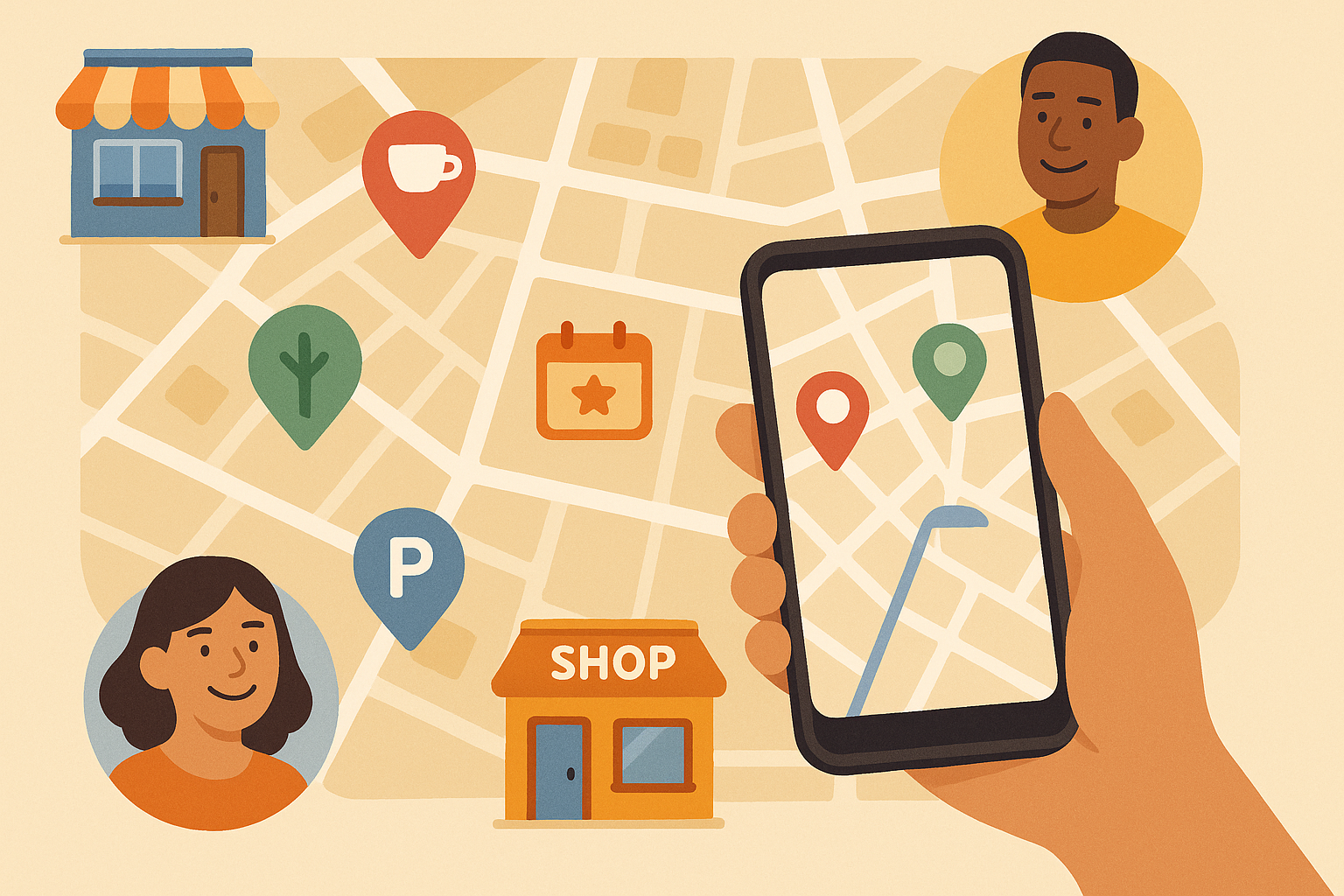
Make maps truly interactive. Use Google Maps or Mapbox to create a branded custom map with colored pins for categories. Add short descriptions to pins and link each pin back to the relevant section. If you manage multiple neighborhoods, create multiple map layers that users can toggle. Keep legend text simple and readable at a glance.
Use schema markup where it counts. Even if you cannot implement full JSON-LD for every profile, add Event schema to your calendar items and LocalBusiness or Place schema to a handful of cornerstone profiles. Include sameAs links to official sites. This supports richer search results and higher clarity for search engines.
Do not forget accessibility. Provide alt text, avoid text on images for critical info, and include keyboard-friendly navigation. Accessibility tips in your content should be specific, like where a ramp entrance is or which bus line has low-floor vehicles. Useful accessibility content gets cited by community groups and disability advocates, which often leads to high-quality backlinks.
Promotion And Maintenance
Publishing your locals guide is step one. The magic happens when you activate it in the community. Start by emailing featured businesses with a friendly note, their profile link, and a request for them to share it on their site and socials. Offer to update their section anytime. Many will reciprocate without you having to push.
Pitch a small story to local media tied to a timely angle. Think new season, major festival, or a civic project that impacts parking or transit. When you pitch, link directly to the relevant section of your guide and include a clean, media-ready image.
Keep your guide fresh with a light update cycle. Set a monthly reminder to verify event listings and check a handful of business details for NAP accuracy. Rotate in new local gems you discover and retire spots that have closed. If you run sponsorships or attend events, publish a short recap post and link it back to your guide to increase internal linking and session depth.
Track simple metrics that prove value. Watch for new backlinks in your analytics, growth in organic visits to guide pages, and movement in your Google Business Profile insights like discovery searches and map views. Keep an eye on engagement signals too, such as average time on page and clicks to the map. These signals tell you whether readers are using the guide as intended.
Action Plan: Launch In 14 Days
- Pick a defined area. Start with one neighborhood you know well. Create a page or section for that area on your site, and plan for expansion later. A narrow scope helps you ship faster and keeps your research tight.
- Draft a simple, repeatable layout. Lead with a short neighborhood intro, a map, three to five categories with two to four picks each, and a small event section. Add clear parking and accessibility information to each listing. Include a footer with a link to submit suggestions.
- Collect assets quickly. Walk the area one afternoon and take photos. Ask owners for a short quote and confirm their NAP. Build your custom map as you go, adding pins from your phone. Back at your desk, write the blurbs while the details are fresh.
- Publish, then amplify. Email featured businesses, post on your social channels, and message neighborhood groups. If a timely angle exists, pitch it to local media. Tie your launch to any existing partnerships or sponsorships to boost distribution. If you are co-hosting or supporting an event soon, update the events section and mention your guide in the promo materials. R
- Iterate with feedback. As suggestions roll in, update entries, fix hours, and add new spots. Treat your guide like a product, not a post. Over time, build out more neighborhoods and add richer features like seasonal guides or a family-friendly edition.